Learn · Hypothesis
From stardust to Earth
Education only. Carbonado’s origin is unresolved and debated. Nothing on these pages describes, or is connected to, any Luxurious Specimens lot. No lot is claimed to be carbonado or to come from space.
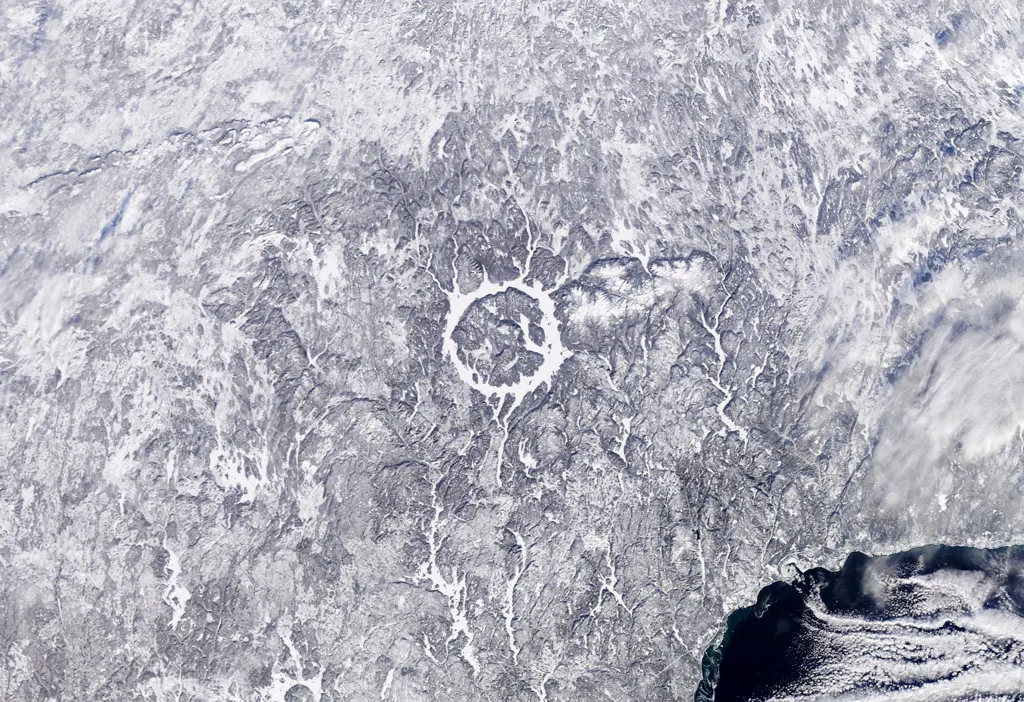
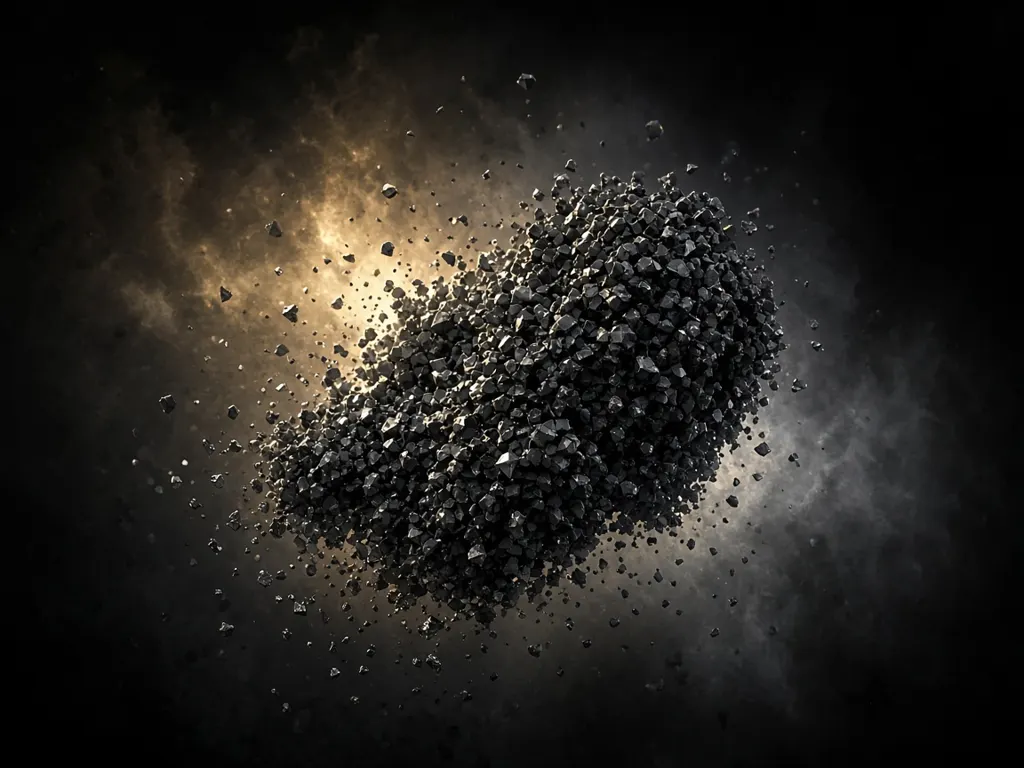
In the space-origin view, carbonado grew from carbon in the debris of dying stars, in a setting rich in hydrogen[1,2]. Its sintered, porous texture and glassy surface patina are cited as signs of an unusual birthplace[1,3]. Titanium nitride (osbornite) has been reported in conference abstracts and linked to space-like conditions[4], but researchers describing related nitrides argued they could also form deep in Earth’s mantle[5].
Dating of lead isotopes puts carbonado at about 2.6 to 3.8 billion years old[6]. Its carbon is isotopically very light[3]. The 2006 paper describes the parent as a fragmented body of asteroidal proportions[1], and Haggerty has said he favors a single asteroid that carried the stones embedded in another rock[7,8].
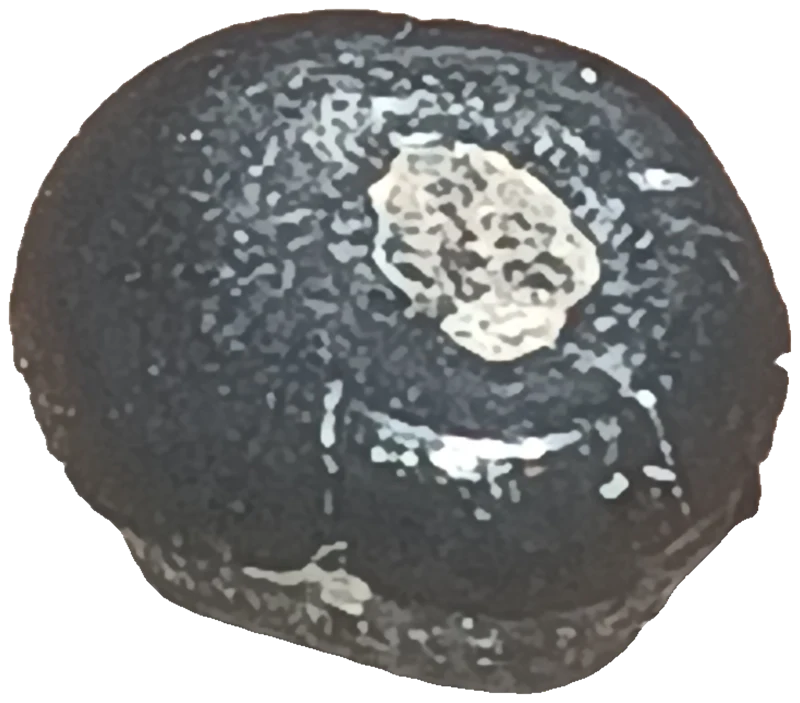
ASA Digital Art’s theory: based on ASA Digital Art’s own research and analysis, we propose that carbonado’s pores and holes could be plasma channels formed during atmospheric entry. This is our own untested idea, not a published finding or established science. ASA Digital Art’s observation: some features on ASA Digital Art’s own specimens (not identified as carbonado) look rounded, with a hole in the center, which we read as possible support for the idea; it does not prove it. No origin, space or otherwise, is claimed for any ASA Digital Art specimen or Luxurious Specimens lot. Part of ASA Digital Art’s argument: boring sea organisms such as sponges, bivalves like piddock clams, and worms bore into calcium-carbonate materials such as limestone, coral and shell, by chemical etching, scraping or both[9]; that review covers carbonate materials and does not discuss diamond. We are not aware of any organism known to bore diamond, so if the holes are in diamond material like carbonado, ASA Digital Art argues that marine boring is unlikely to explain them. This is our own reasoning, not a finding of that paper. Published research explains the porosity in other ways: a GIA review likens the pores to vesicles in degassed lava and, in the space-origin model, attributes them to the loss of hydrogen[3].
Critics answer that no host rock or parent body has been found, and known impact diamonds look different[3]. For now the arrival story remains one hypothesis among several[10].
← Back to the carbonado timeline
Sources
- Garai, J., Haggerty, S. E., Rekhi, S. & Chance, M. (2006). Infrared absorption investigations confirm the extraterrestrial origin of carbonado diamonds. The Astrophysical Journal Letters 653, L153–L156. https://doi.org/10.1086/510451
- U.S. National Science Foundation news release (Jan. 9, 2007), “Diamonds from outer space: geologists discover origin of Earth's mysterious black diamonds,” via EurekAlert! https://www.eurekalert.org/news-releases/910688
- Gems & Gemology (GIA), Summer 2017, “Carbonado Diamond: A Review of Properties and Origin.” https://www.gia.edu/gems-gemology/summer-2017-carbonado-diamond
- 35th International Geological Congress (2016) abstract: “Osbornite (TiN): Implications for an extraterrestrial origin of carbonado-diamonds” (conference abstract, not peer-reviewed). https://information.americangeosciences.org/open-collections/igc/1486/
- “New nitride minerals in carbonado diamond,” International Kimberlite Conference extended abstract (Birkbeck, University of London repository). https://eprints.bbk.ac.uk/id/eprint/27774
- Gems & Gemology (GIA), Summer 2013 abstract, “Internal Texture and Syngenetic Inclusions in Carbonado.” https://www.gia.edu/gems-gemology/su13ab-internal-texture-and-syngenetic-inclusions-in-carbonado
- Discover Magazine, “Diamonds From Outer Space” (interview reporting Haggerty's single-asteroid view). https://www.discovermagazine.com/60-diamonds-from-outer-space-11985
- New Scientist, “Rare black diamonds may have come from space.” https://www.newscientist.com/article/1900370-rare-black-diamonds-may-have-come-from-space/
- Schönberg, C. H. L., Fang, J. K. H., Carreiro-Silva, M., Tribollet, A. & Wisshak, M. (2017). Bioerosion: the other ocean acidification problem. ICES Journal of Marine Science 74(4), 895–925. https://doi.org/10.1093/icesjms/fsw254
- Haggerty, S. E. (2014). Carbonado: Physical and chemical properties, a critical evaluation of proposed origins, and a revised genetic model. Earth-Science Reviews. https://doi.org/10.1016/j.earscirev.2013.12.008
Image credits
- Background: Cassiopeia A (NIRCam image), weic2330a. Credit: NASA, ESA, CSA, STScI, D. Milisavljevic (Purdue University), T. Temim (Princeton University), I. De Looze (University of Gent). Source (CC BY 4.0).
- How the continents moved from Pangaea (250 million years ago) to today: U.S. Geological Survey, This Dynamic Earth: The Story of Plate Tectonics. Source (USGS, public domain).
- Southern Florida’s Everglades: NASA Earth Observatory images by Jesse Allen, using Landsat data from the U.S. Geological Survey. Source (NASA, public domain).
- Supernova 1987A: NASA, ESA, and R. Kirshner (Harvard-Smithsonian Center for Astrophysics and Gordon and Betty Moore Foundation) and P. Challis (Harvard-Smithsonian Center for Astrophysics). Source (CC BY 4.0).
- Carbon-rich dust shells around the star Wolf-Rayet 140: NASA, ESA, CSA, STScI, E. Lieb (University of Denver), R. Lau (NSF NOIRLab), J. Hoffman (University of Denver). Source (CC BY 4.0).
- Manicouagan Crater: NASA Earth Observatory image by Lauren Dauphin, using MODIS data from NASA EOSDIS LANCE and GIBS/Worldview. Source (NASA, public domain).
- The Pilbara Craton in Western Australia (false color): NASA Earth Observatory image by Joshua Stevens, using data from NASA/METI/AIST/Japan Space Systems, and the U.S./Japan ASTER Science Team. Source (NASA, public domain).
- The Atlantic between Brazil and Africa today: NASA Earth Observatory image by Joshua Stevens, using imagery from the Deep Space Climate Observatory (DSCOVR). Source (NASA, public domain).
- Dzanga Bai: NASA Earth Observatory image by Lauren Dauphin, using Landsat data from the U.S. Geological Survey and data from OpenStreetMap (OSM map data © OpenStreetMap contributors, ODbL). Source (NASA, public domain; map data ODbL).
- Skully photos (asa-specimen-01, 02, 03, 08 and asa-skully-scale): ASA Digital Art (own photos of one ASA specimen, Skully, under different lighting and angles; the scale photo is cropped with the scale branding blurred; not identified as carbonado; no origin is claimed; not a lot for sale).
- Other specimen photos (asa-specimen-07, 09, 10): ASA Digital Art (own photos of ASA specimens, background removed; not identified as carbonado; no origin is claimed; not lots for sale).
- Gravel photos (asa-gravel-04, 05, 06): ASA Digital Art (own photos of crushed sediment and gravel; no site named). Collected lawfully over about a decade as a personal hobby, on break and lunch time while working on construction projects, with authorization to remove non-building material that would otherwise have been thrown out or buried under pavement; not from any park, preserve or public land where collecting is restricted.
- Red-hot images (asa-specimen-09-redhot, asa-specimen-10-redhot): Digitally edited illustration based on a photo of an ASA Digital Art specimen. The red-hot glow was added digitally to picture the plasma-channel idea; the specimen was not heated and does not look like this. Not identified as carbonado; no origin is claimed. Speculative. Made locally from ASA Digital Art photos.
- Fossil tooth photo: ASA Digital Art (own photo of a fossil found with ASA specimens; appears to be a Megalodon tooth; not a lot for sale).
- 1200x microscope photo: ASA Digital Art (own photo of an ASA specimen; not identified as carbonado; not a lot).
- Images labeled “Illustration (digital render)” are artwork made for this page. They are not photographs and do not show actual specimens or any lot.
ESA/Hubble and ESA/Webb images are used under CC BY 4.0. Use of these images does not imply endorsement by ESA, NASA, CSA or STScI. NASA images are public domain and credited as requested.