Learn · Science
Carbonado: a timeline of the black diamond
Where carbonado came from is one of geology’s open questions. This timeline follows one published hypothesis, a space origin, beside the geologic record and the Earth-based alternatives.
Education only. Carbonado’s origin is unresolved and debated. Nothing on these pages describes, or is connected to, any Luxurious Specimens lot. No lot is claimed to be carbonado or to come from space.
Theory a published, debated hypothesis · Geologic record well-established geology · Speculative scenario — an ASA Digital Art hypothesis and ASA Digital Art’s observation / hypothesis our own ideas, not from the sources. All dates are approximate.
Theory
Unknown, more than ~3.8 billion years ago1. Carbon-rich stellar debris
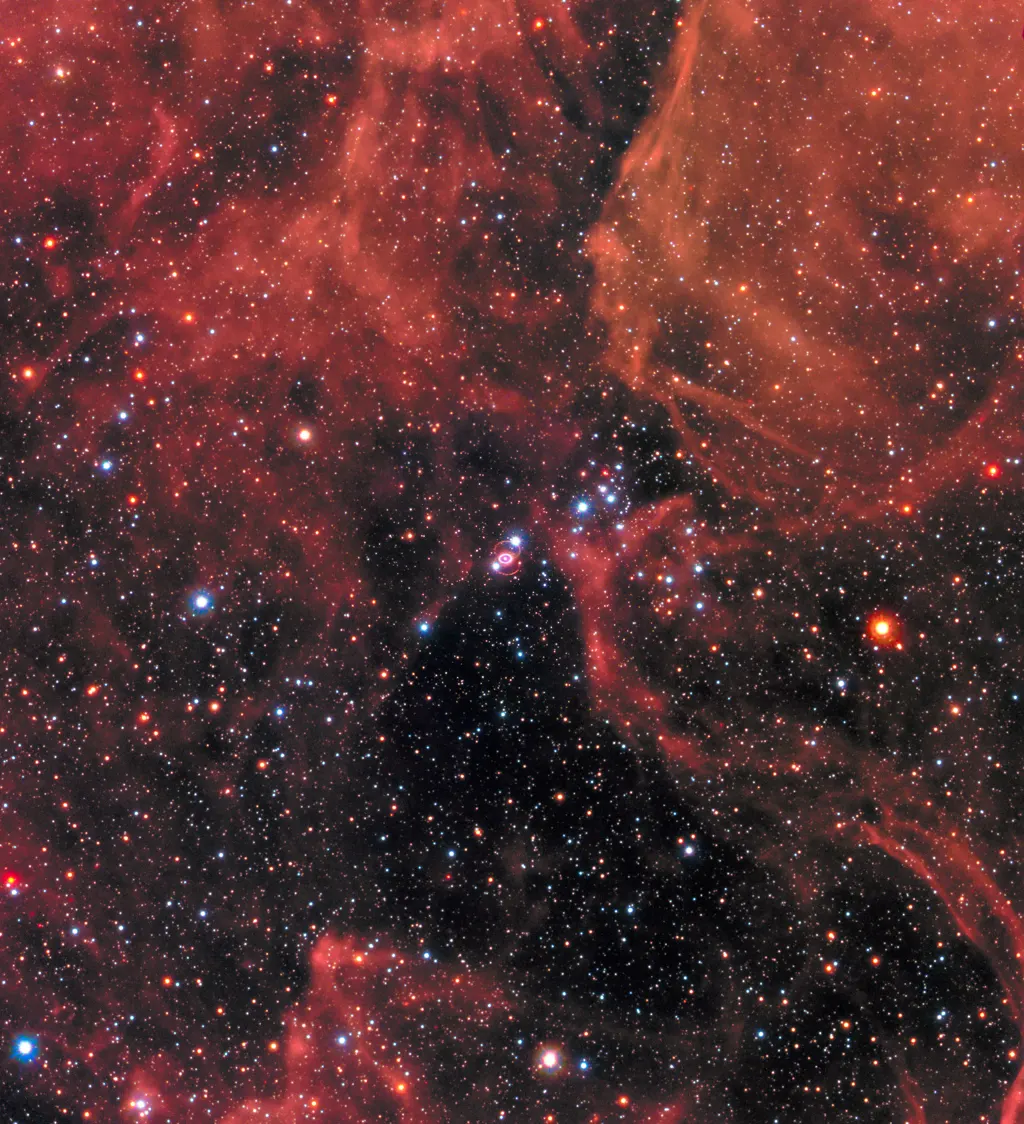
Supernova 1987A, imaged by Hubble, shown for illustration. It is not the source of carbonado. Credit: NASA, ESA, and R. Kirshner (Harvard-Smithsonian Center for Astrophysics and Gordon and Betty Moore Foundation) and P. Challis (Harvard-Smithsonian Center for Astrophysics). Source (CC BY 4.0). One published hypothesis, from geologist Stephen Haggerty and colleagues, holds that carbonado formed in carbon-rich debris from exploding stars[1,2]. Infrared spectra show hydrogen and single (unaggregated) nitrogen; the authors compared them with lab-grown (CVD) and presolar diamonds and proposed a hydrogen-rich interstellar birthplace[3]. Other researchers read similar signals as water and carbonate trapped inside the diamond[4,5].
Theory
Unknown2. Carbonado forms
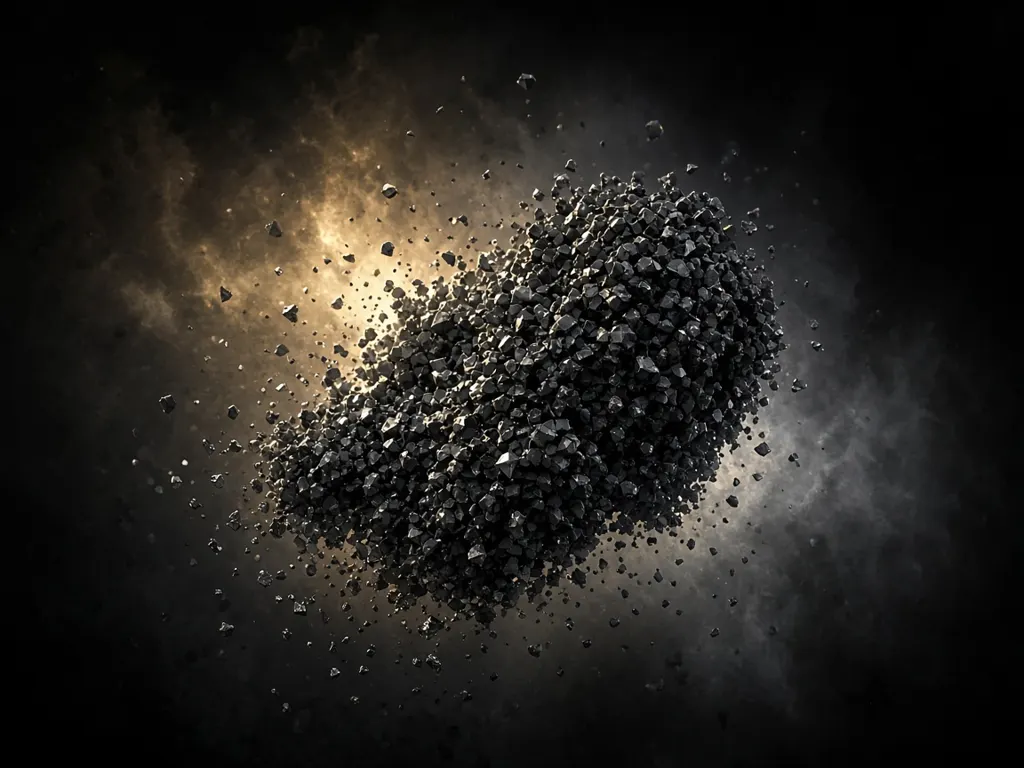
Illustration (digital render): tiny diamond grains clumping into a porous aggregate, as the space-origin hypothesis imagines. 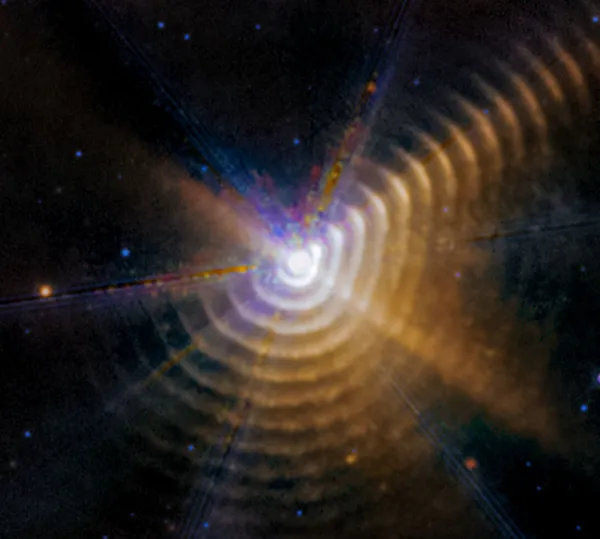
Carbon-rich dust shells around the star Wolf-Rayet 140, imaged by Webb, shown for illustration of carbon dust in space. Credit: NASA, ESA, CSA, STScI, E. Lieb (University of Denver), R. Lau (NSF NOIRLab), J. Hoffman (University of Denver). Source (CC BY 4.0). Carbonado is polycrystalline: a strongly bonded, porous, sintered mass of tiny diamond crystals, often with a glassy, melt-like surface patina[3,6]. Unlike diamonds from kimberlite volcanoes, it lacks the typical mantle mineral inclusions[6], although nanometer-scale inclusions, including garnet, have been reported and read by some as crustal[7]. Titanium nitride (the mineral osbornite) has been reported in carbonado in conference abstracts and cited as space-like[8]; other researchers describing related Ti–Cu nitrides favored a very hot, deep-mantle origin instead[9].
Speculative scenario — an ASA Digital Art hypothesis
Speculative, undated3a. A giant diamond-bearing body
ASA Digital Art’s speculation, not a published finding: the original mass may have been enormous, perhaps the size of a skyscraper, before collisions broke it apart. Published work does describe a large parent body: the 2006 paper calls it a fragmented body “of asteroidal proportions”[3], and the NSF release says “a kilometer or more in diameter”[1]. The skyscraper comparison and the collision story are ours.
Theory
~2.6–3.8 billion years ago (only in the space-origin hypothesis)3. Arrival on early Earth
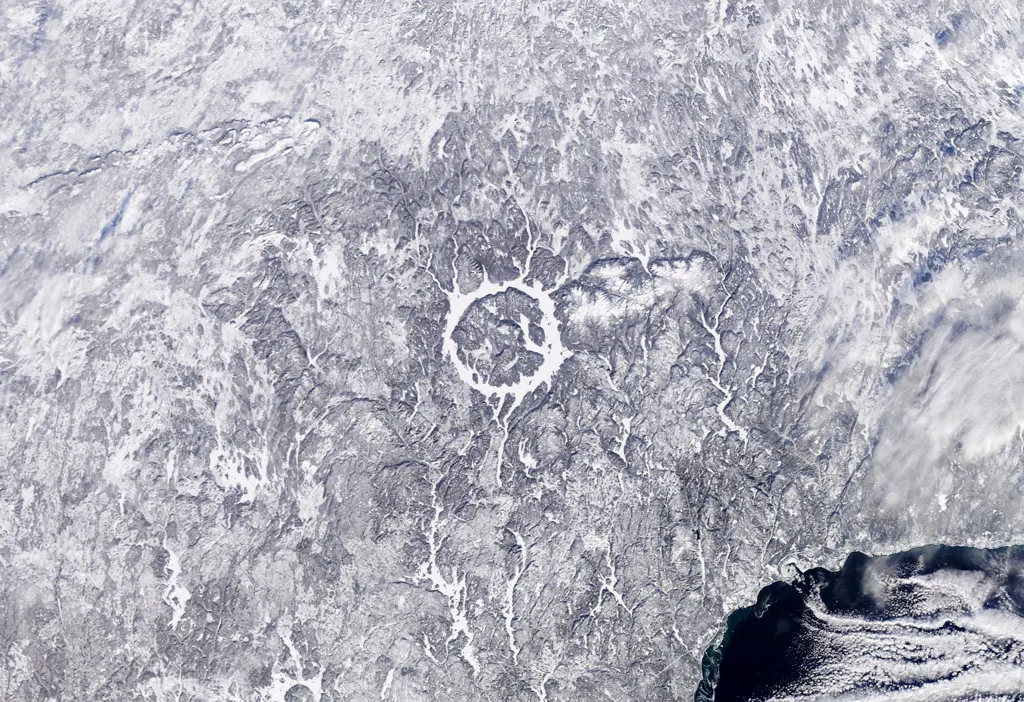
Manicouagan Crater, an ancient impact crater in Quebec, Canada, seen from orbit. Shown for illustration; it is not a carbonado site. Credit: NASA Earth Observatory image by Lauren Dauphin, using MODIS data from NASA EOSDIS LANCE and GIBS/Worldview. Source (NASA, public domain). In the space-origin view, carbonado reached Earth inside an asteroid-sized body[3,1]. Haggerty has said he favors a single asteroid impact, with the stones arriving embedded in another rock that later weathered away[10,11]. Critics note that known impact diamonds (for example from Popigai or Ries) are discrete microdiamonds, not carbonado[6].
Speculative scenario — an ASA Digital Art hypothesis
Speculative, undated3b. A shower over one region
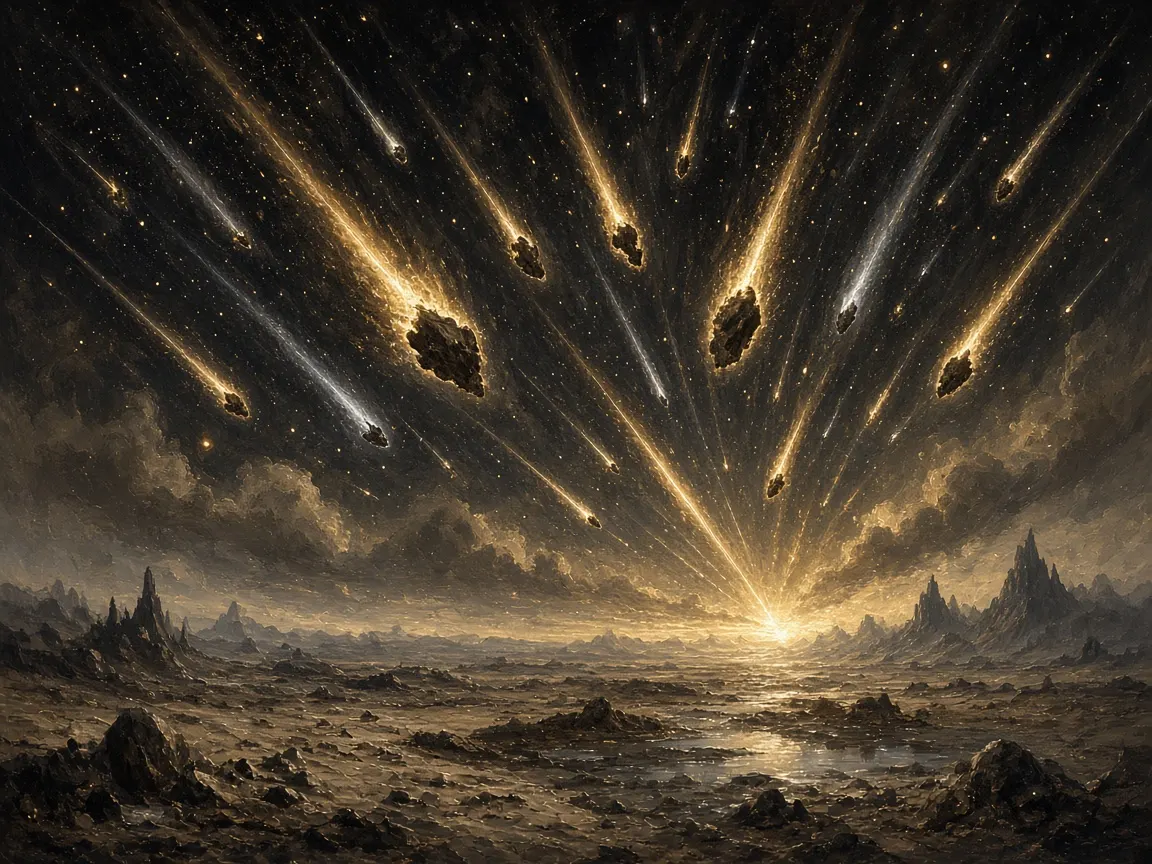
Illustration (digital render): a meteor shower over an ancient landscape. Speculative scene. 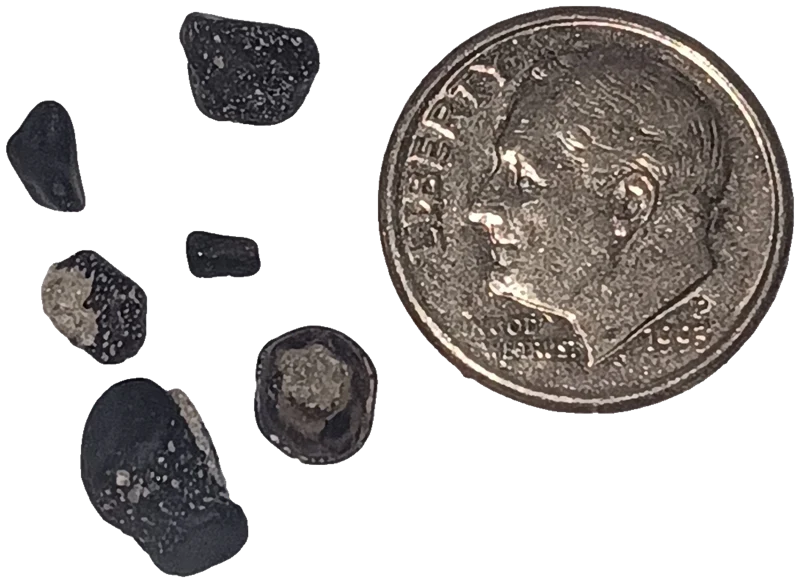
Photo of an ASA Digital Art specimen, shown for illustration. Not identified as carbonado; no origin is claimed. Not a lot for sale. 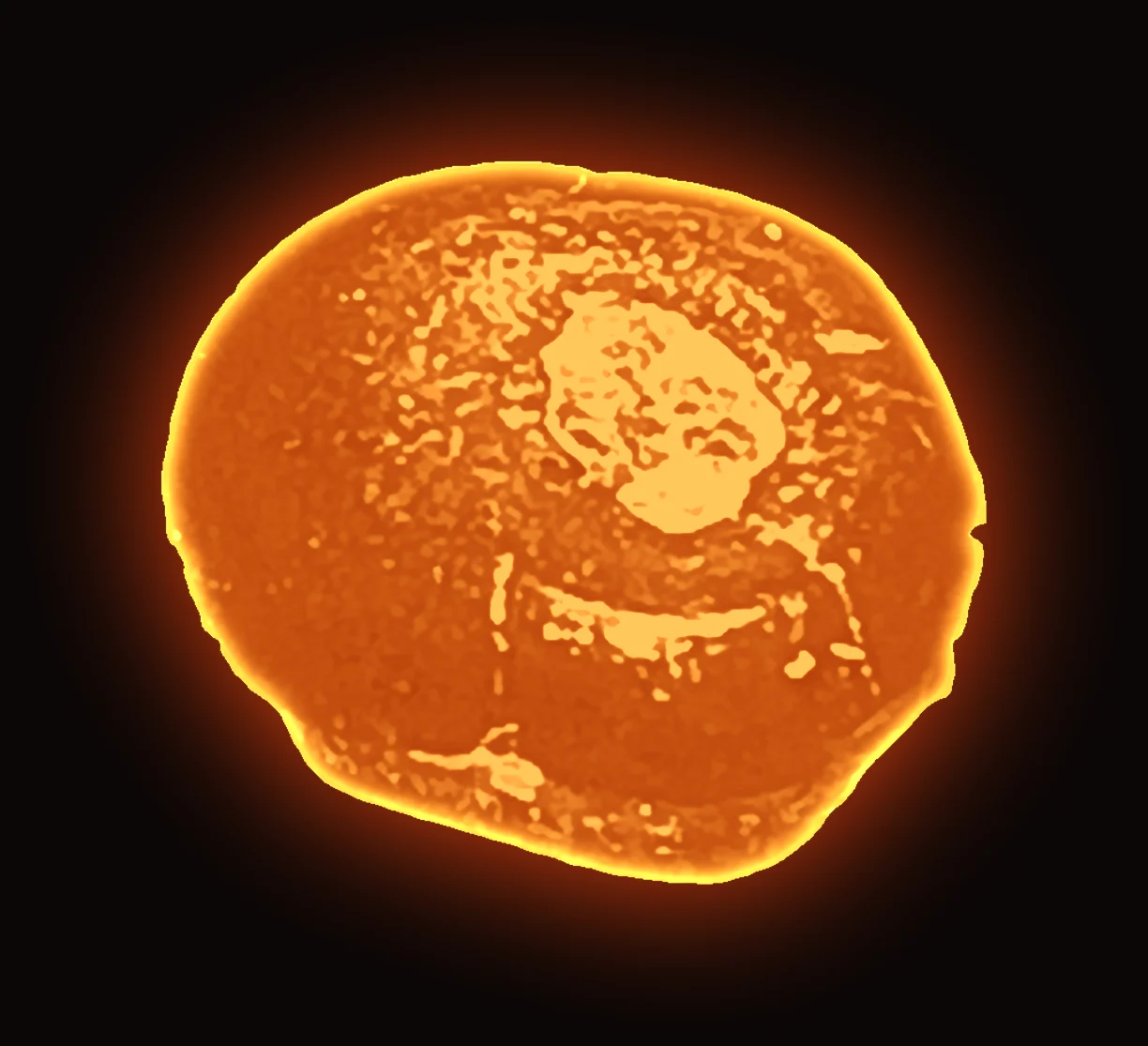
Digitally edited illustration based on a photo of an ASA Digital Art specimen. The red-hot glow was added digitally to picture the plasma-channel idea; the specimen was not heated and does not look like this. Not identified as carbonado; no origin is claimed. Speculative. 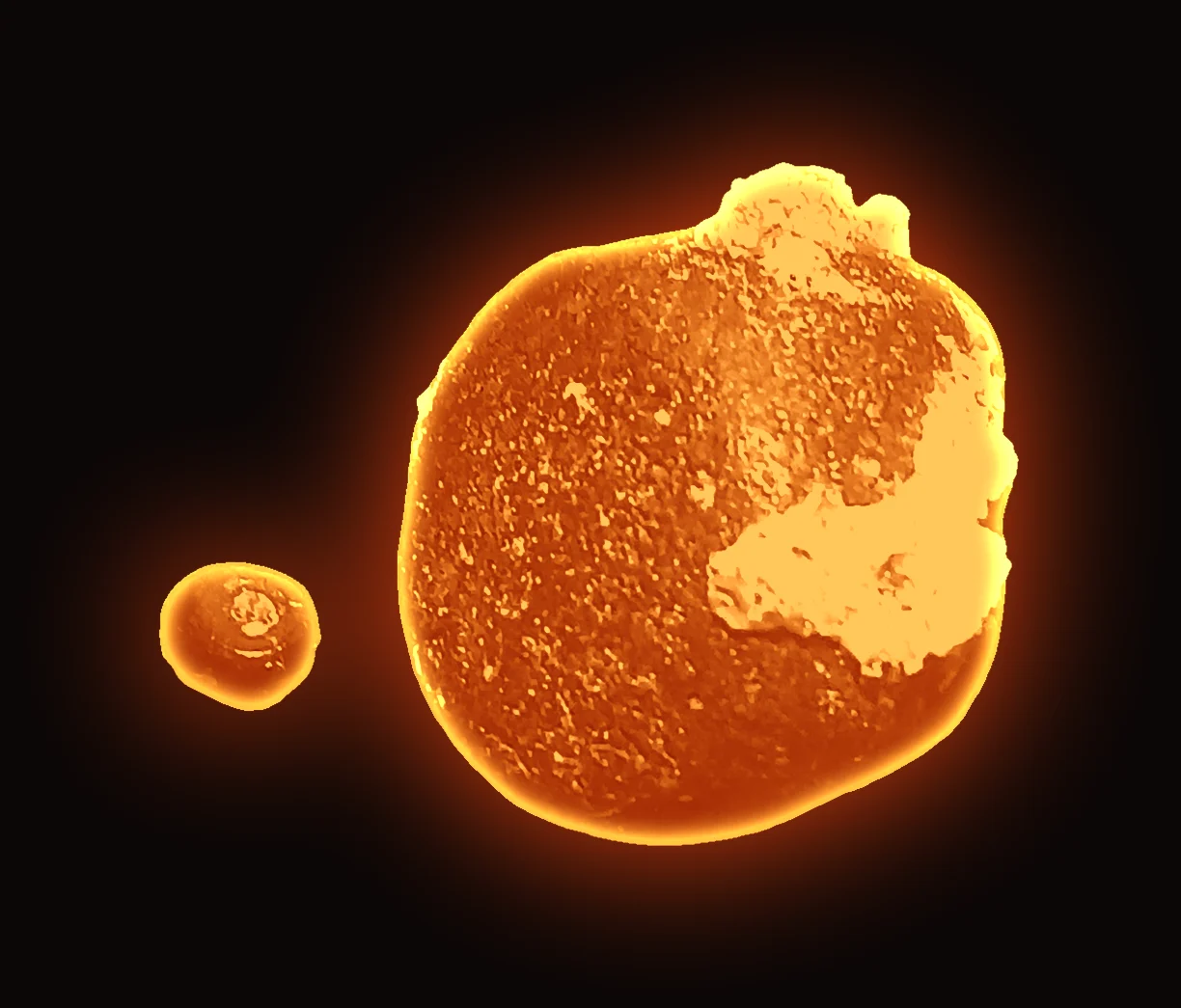
Digitally edited illustration based on a photo of an ASA Digital Art specimen. The red-hot glow was added digitally to picture the plasma-channel idea; the specimen was not heated and does not look like this. Not identified as carbonado; no origin is claimed. Speculative. ASA Digital Art’s speculation: the fragments may have fallen as a meteorite shower concentrated over one area of the joined Brazil–Africa landmass, and that concentrated, consolidated origin might point to a nearby star’s supernova. The single-body, joined-landmass part echoes Haggerty’s published view[11,10]; the link to a nearby star’s supernova is our speculation and is not in the sources. ASA Digital Art’s theory, not a published finding: based on ASA Digital Art’s own research and analysis, the pores and holes in carbonado could be plasma channels formed as the fragments passed through the atmosphere on entry. This is our own untested idea; it has not been published or independently confirmed. ASA Digital Art’s observation: under magnification, some features on ASA Digital Art’s own specimens (not identified as carbonado) look rounded, with a hole in the center, and we read that as possible support for the plasma-channel idea. It is an observation of our own pieces and does not prove it. No origin, space or otherwise, is claimed for any ASA Digital Art specimen or Luxurious Specimens lot. Part of ASA Digital Art’s argument: boring sea organisms such as sponges, bivalves like piddock clams, and worms bore into calcium-carbonate materials such as limestone, coral and shell, by chemical etching, scraping or both[12]; that review covers carbonate materials and does not discuss diamond. We are not aware of any organism known to bore diamond, so if the holes are in diamond material like carbonado, ASA Digital Art argues that marine boring is unlikely to explain them. This is our own reasoning, not a finding of that paper. ASA Digital Art’s theory: ASA Digital Art also reads the blue and pink flashes we have seen on some of our specimens under strong light as possible light scattering through micro-clusters of tiny crystals; this is our own untested reading, not tested by any lab, and not a claim about gem quality or any optical property. Published research explains carbonado’s porosity in other ways: a GIA review compares the pores to gas bubbles (vesicles) in lava that degassed near the surface and, in the space-origin model, attributes them to the loss of hydrogen[6].
ASA Digital Art’s observation / hypothesis
ASA timing: ~2.4 billion years ago (Great Oxygenation Event).3c. Landing in an ancient ocean
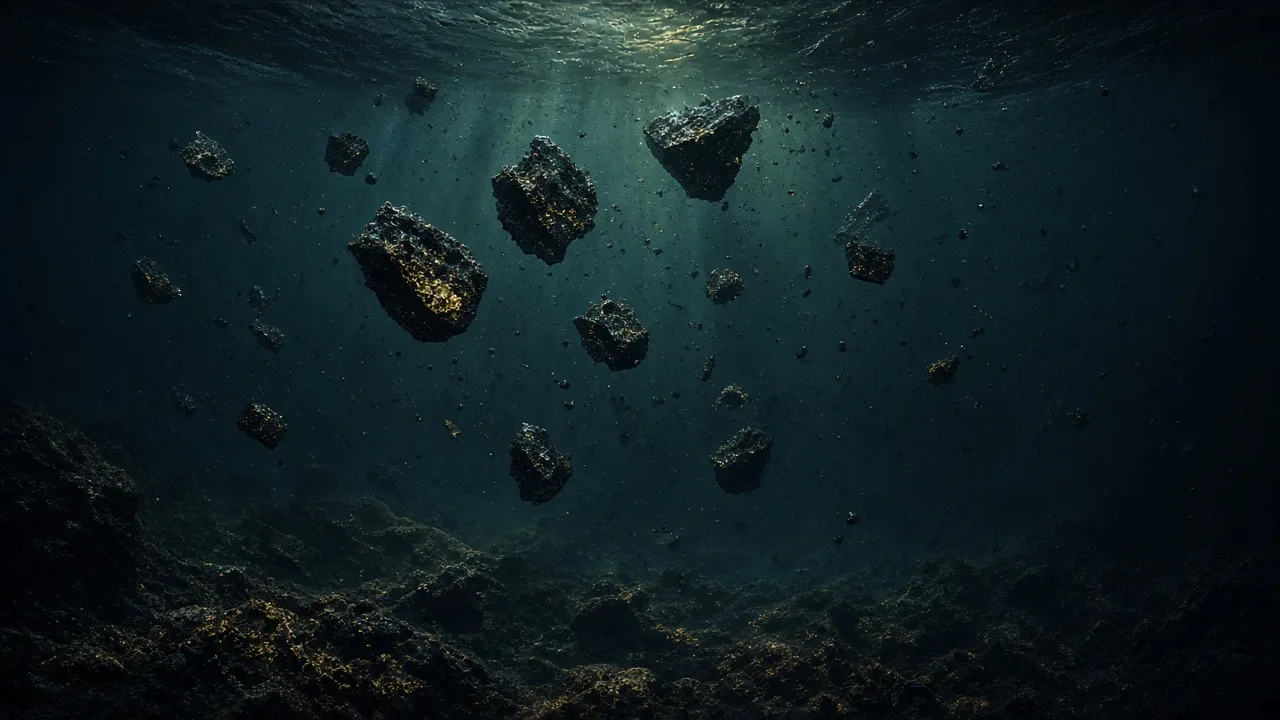
Illustration (digital render): dark fragments settling through an ancient ocean, as in ASA Digital Art’s theory. Artistic, not to scale. Speculative scene. ASA Digital Art’s theory: the fragments came down in an ancient ocean during the Great Oxygenation Event, when oxygen first became abundant in Earth’s atmosphere, between about 2.4 and 2.1 billion years ago[13,14]. That period transformed the chemistry of the oceans and atmosphere and changed the course of life[14]. This is our own idea, not a published finding. Published carbonado ages are about 2.6–3.8 billion years[7], and the space-origin hypothesis places the arrival in that same range[1,3], so a landing around 2.4 billion years ago would be later than the published view and is untested.
ASA Digital Art’s observation / hypothesis
Later (undated)3d. The land rises and becomes desert
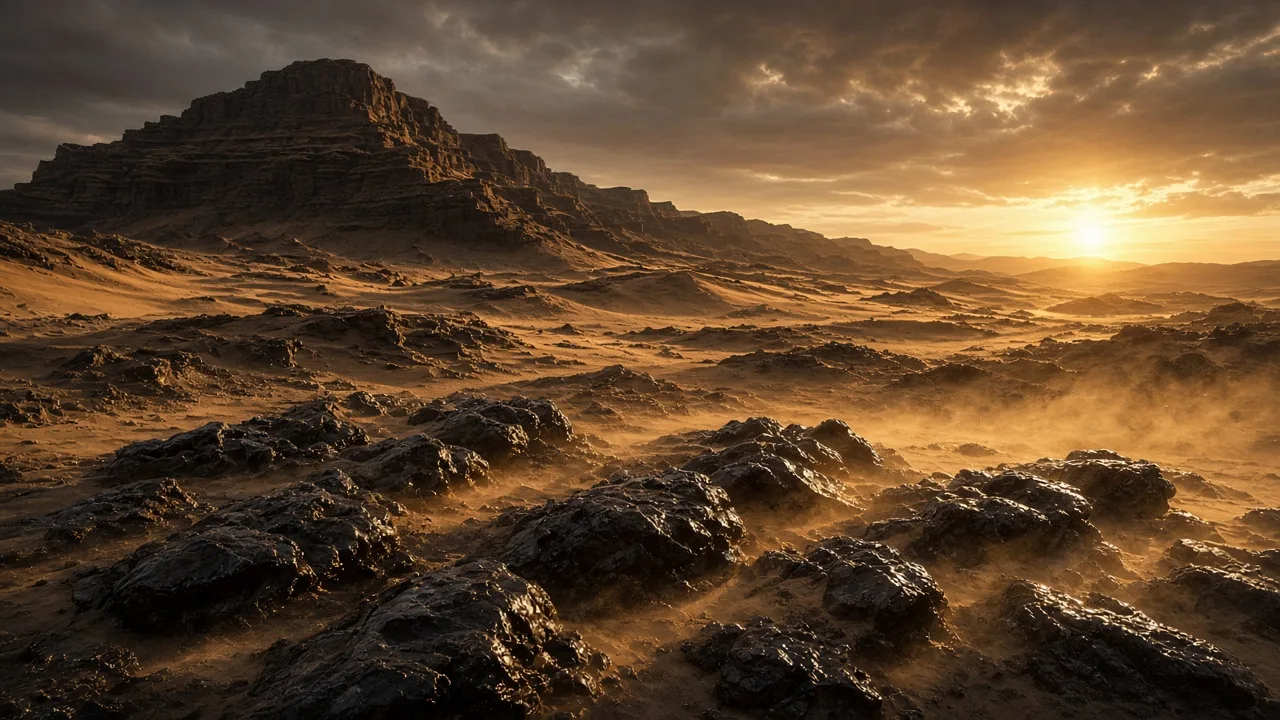
Illustration (digital render): an uplifted, wind-swept desert with dark, varnished rocks, as in ASA Digital Art’s hypothesis. Artistic, not to scale. Speculative scene. ASA Digital Art’s hypothesis: the land later rose and became desert. We have not matched this to a specific, sourced desert period for the São Francisco–Congo region, so no date is given.
ASA Digital Art’s observation / hypothesis
Observation3e. A varnished surface?
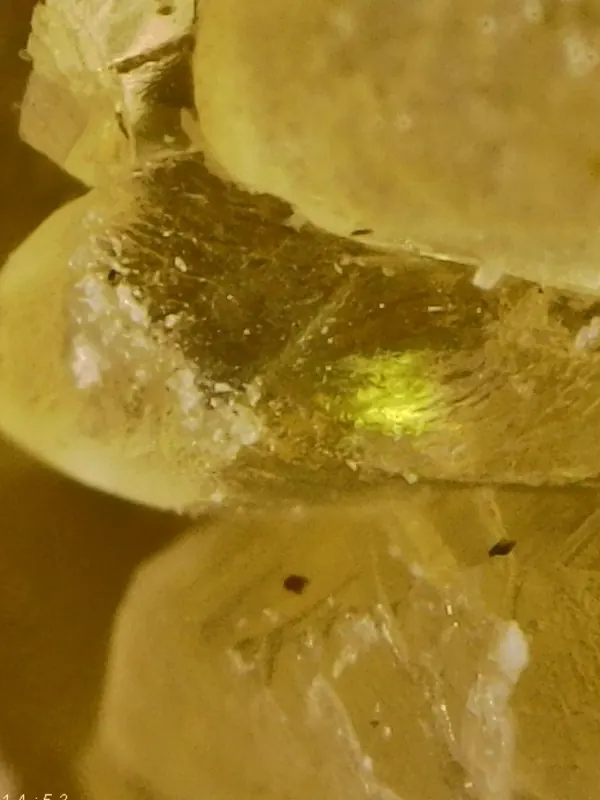
ASA Digital Art microscope photo, 1200x magnification, opposing light beams. Actual photo of an ASA Digital Art specimen; not identified as carbonado, and not a lot for sale. ASA Digital Art’s observation, not an established finding: part of the black surface may be a desert-varnish-like coating that becomes see-through when strong light shines from opposite directions, as seen in our 1200x microscope photos. Desert varnish is real: a thin dark coating of clay with manganese and iron oxides that forms on exposed rocks in arid climates[15,16]. The published view is that carbonado’s dark, opaque look comes mainly from its randomly oriented microcrystals, pores and inclusions[6,17], and its surface often carries a glassy diamond patina[6].
Geologic record
~2.6–3.8 billion years (carbonado ages)4. Resting in an ancient landmass
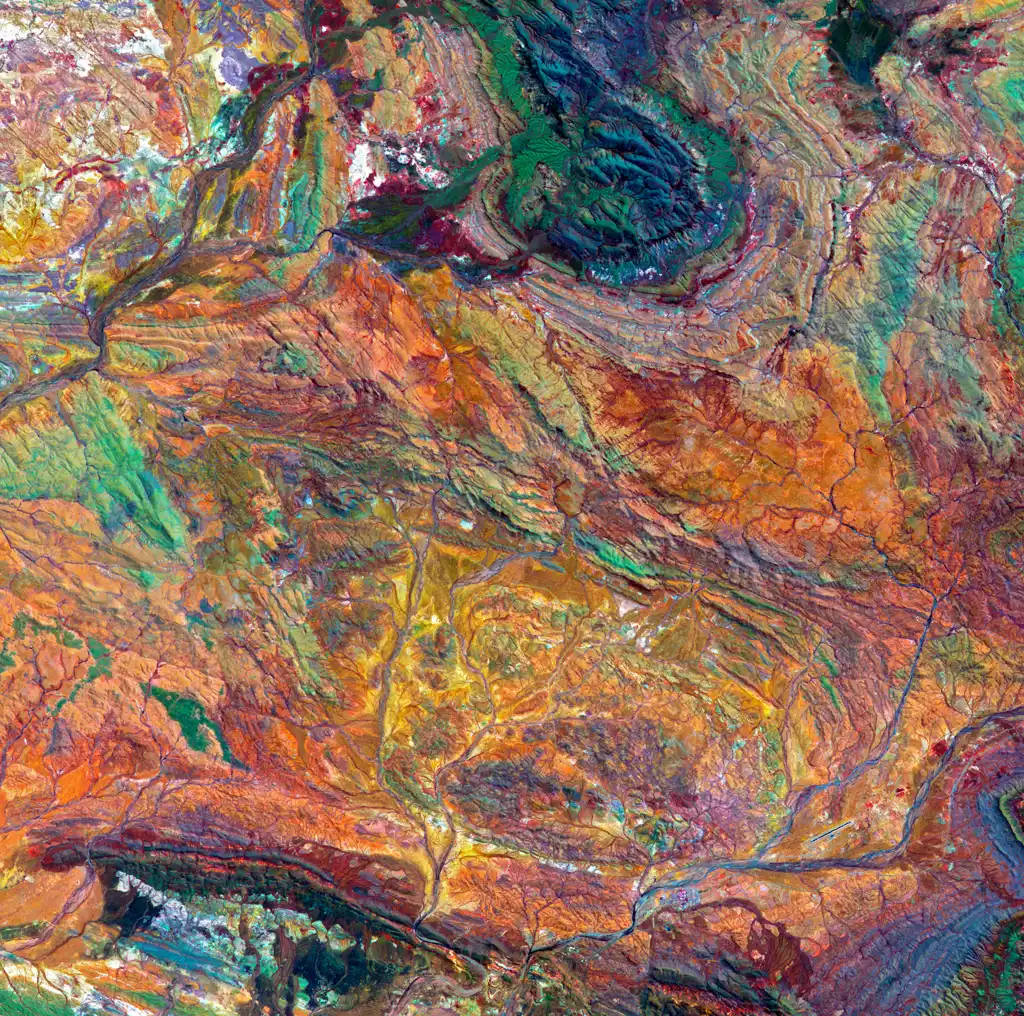
The Pilbara Craton in Western Australia (false color), shown as an example of an ancient craton. It is not the São Francisco–Congo craton. Credit: NASA Earth Observatory image by Joshua Stevens, using data from NASA/METI/AIST/Japan Space Systems, and the U.S./Japan ASTER Science Team. Source (NASA, public domain). 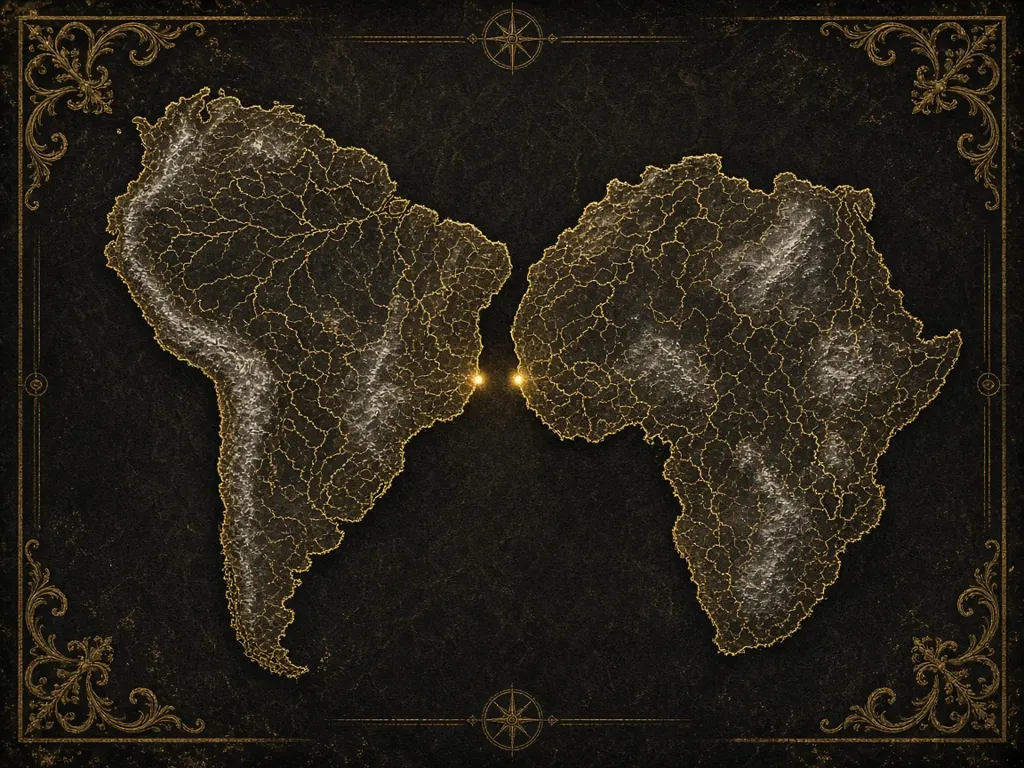
Illustration (digital render): eastern South America and west-central Africa fitted together, as they were before the South Atlantic opened. Artistic, not a scientific map. Lead-isotope dating gives carbonado ages of about 2.6–3.8 billion years[7]. Its carbon is isotopically very light (δ¹³C about −21 to −34‰)[6]. Both known deposits sit on ancient cratons, São Francisco in Brazil and Congo in Africa, which shared one geological setting for more than a billion years[6] and were joined by a “São Francisco–Congo cratonic bridge” until the Cretaceous[18].
Geologic record
~180 million years ago, then ~135–125 million years ago5. Gondwana breaks up; the South Atlantic opens
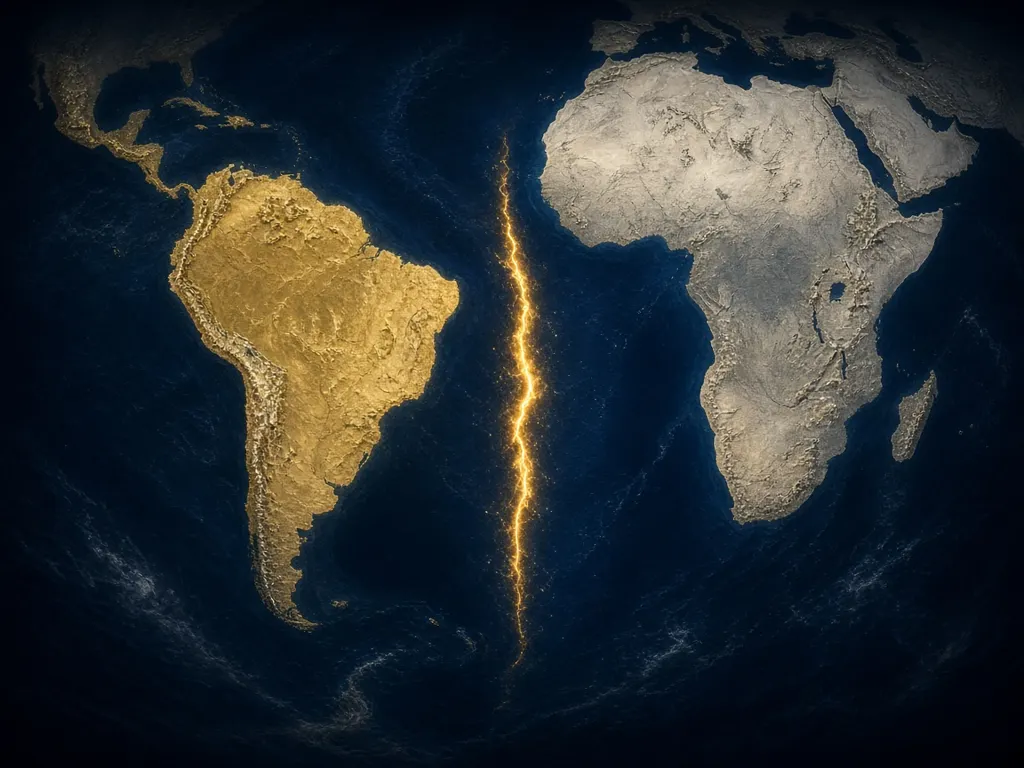
Illustration (digital render): South America and Africa drifting apart as the South Atlantic opens. Artistic, not to scale; modern coastlines shown. Gondwana began to break up about 180 million years ago[6]. The South Atlantic opened later: seafloor spreading began in the south around 135–130 million years ago and spread northward[19,20]. The Atlantic rift cut through the cratonic bridge, leaving one half in Brazil and the other in Africa[18].
Geologic record
Today6. Found only in Brazil and the Central African Republic
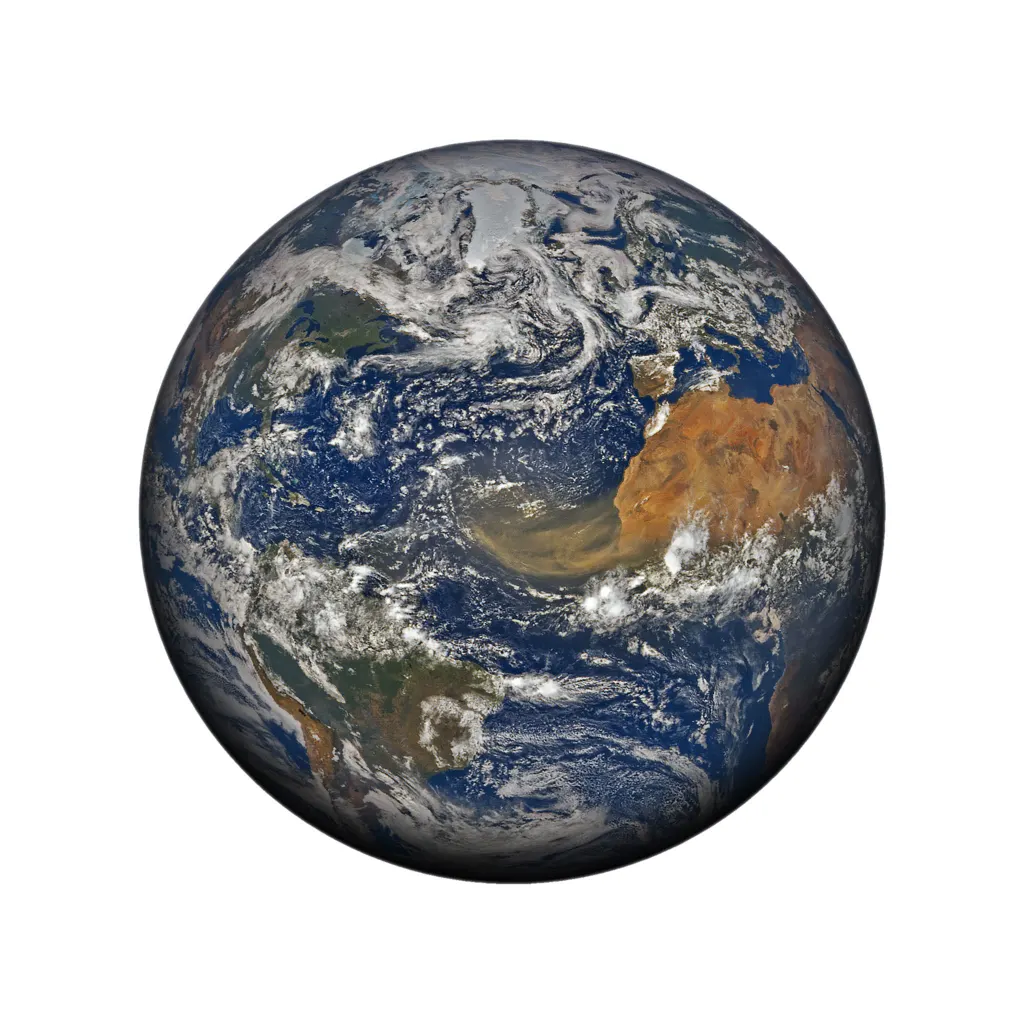
The Atlantic between Brazil and Africa today, seen by NASA's DSCOVR EPIC camera on June 18, 2020. Credit: NASA Earth Observatory image by Joshua Stevens, using imagery from the Deep Space Climate Observatory (DSCOVR). Source (NASA, public domain). 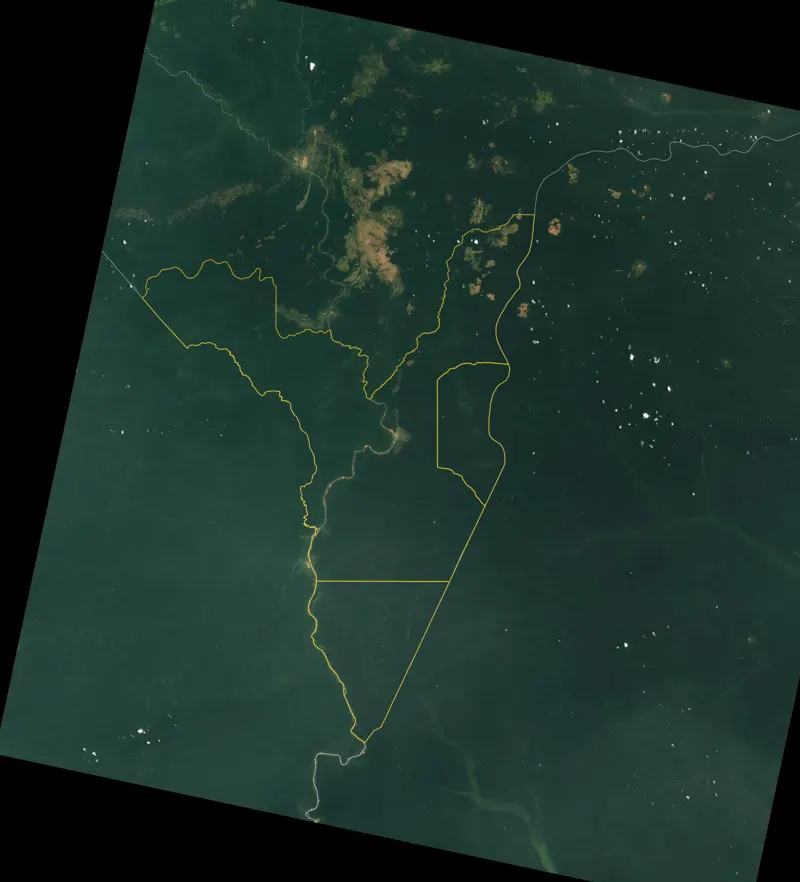
Dzanga Bai, Central African Republic, seen by Landsat 8 (March 28, 2021). Shown for regional context, not as a carbonado locality. Credit: NASA Earth Observatory image by Lauren Dauphin, using Landsat data from the U.S. Geological Survey and data from OpenStreetMap (OSM map data © OpenStreetMap contributors, ODbL). Source (NASA, public domain; map data ODbL). Carbonado is found only in Brazil and the Central African Republic[1,6], in alluvial and placer deposits and never in kimberlite[7]. Its origin is still debated: published ideas include meteorite impact[21], growth from fluids in the crust or mantle[4,5], subduction, radiation from uranium-rich carbon[22] and the space origin above[23].
Geologic record
Early Paleozoic, then ~300 million years ago7. Florida’s deep basement: a piece of Gondwana
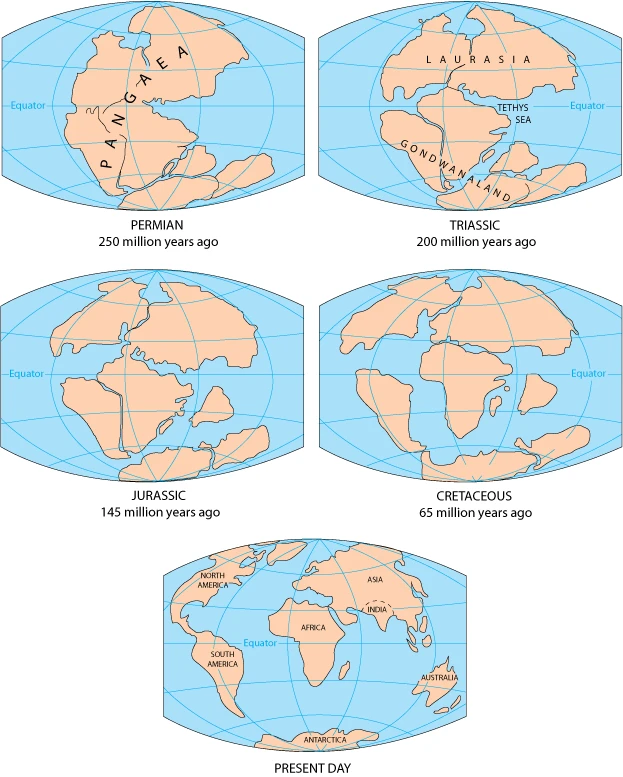
How the continents moved from Pangaea (250 million years ago) to today. Shown for illustration; it does not show carbonado or any find site. Credit: U.S. Geological Survey, This Dynamic Earth: The Story of Plate Tectonics. Source (USGS, public domain). Deep beneath Florida’s young limestone lies much older basement rock. Zircon ages from deep drill samples place Florida’s basement in Gondwana in the early Paleozoic, near the West African and/or Amazonian (South American) cratons[24]. Geologists call this block the Suwannee terrane and regard its sedimentary rocks as Gondwanan and African-derived; it was joined to North America when Pangaea assembled[25], and it remains part of North America today. ASA Digital Art’s theory: this shared Gondwanan heritage, next to the South American and African crust where carbonado is found, is part of why we look to South Florida. The published work says nothing about carbonado.
Speculative scenario — an ASA Digital Art hypothesis
Hundreds of millions to billions of years (undated)8. Reworked into South Florida’s sea floor
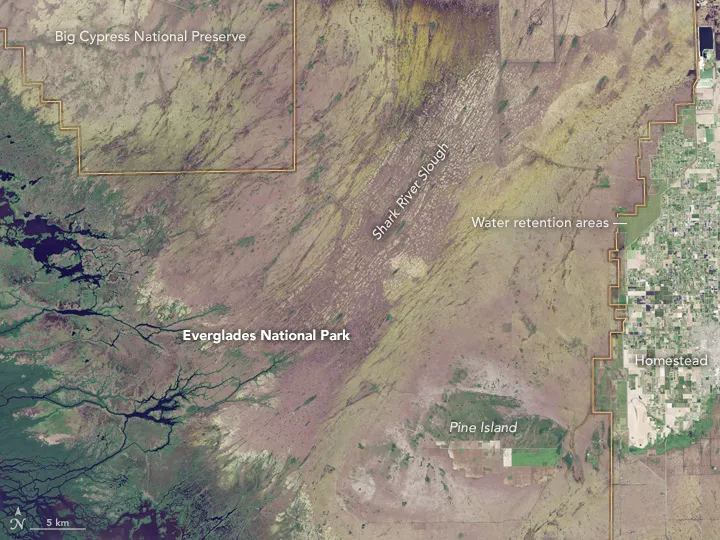
Southern Florida’s Everglades, where young limestone lies at or near the surface, seen by Landsat 8 on October 17, 2014. Shown for illustration; it does not show any find site. Credit: NASA Earth Observatory images by Jesse Allen, using Landsat data from the U.S. Geological Survey. Source (NASA, public domain). 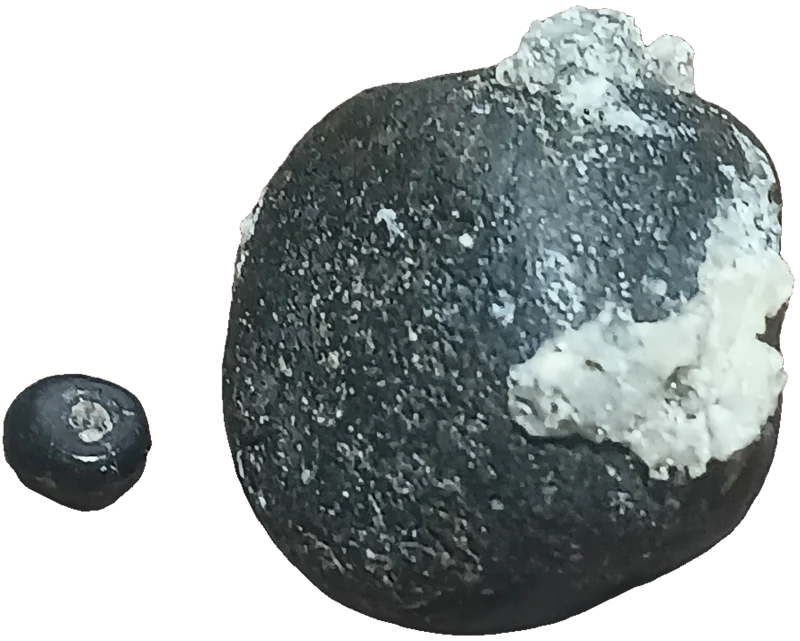
Photo of an ASA Digital Art specimen, shown for illustration. Not identified as carbonado; no origin is claimed. Not a lot for sale. ASA Digital Art’s theory, not a published finding: over hundreds of millions to billions of years, the material was weathered, eroded and carried by rivers and ocean currents, then redeposited in the ocean sediments that became South Florida’s bedrock. This is our own untested idea. Published geology: South Florida’s surface bedrock includes the Miami Limestone, with an oolitic facies and a bryozoan facies, which grades north into the Anastasia Formation[26]; it overlies and grades into the Fort Thompson Formation, and these units are upper Pleistocene[27]. The Pleistocene began about 2.58 million years ago[28]. That bedrock is geologically young compared with published carbonado ages of about 2.6–3.8 billion years[7], so this theory requires the material to have been reworked and transported over a very long time. Carbonado is published as known only from Brazil and the Central African Republic[1,6].
ASA Digital Art’s observation / hypothesis
ASA Digital Art’s accountHow the theory began
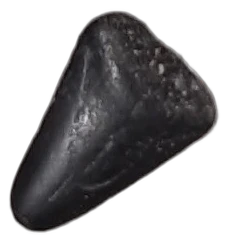
Photo of a fossil found with ASA Digital Art specimens (appears to be a Megalodon tooth). Not a lot for sale. 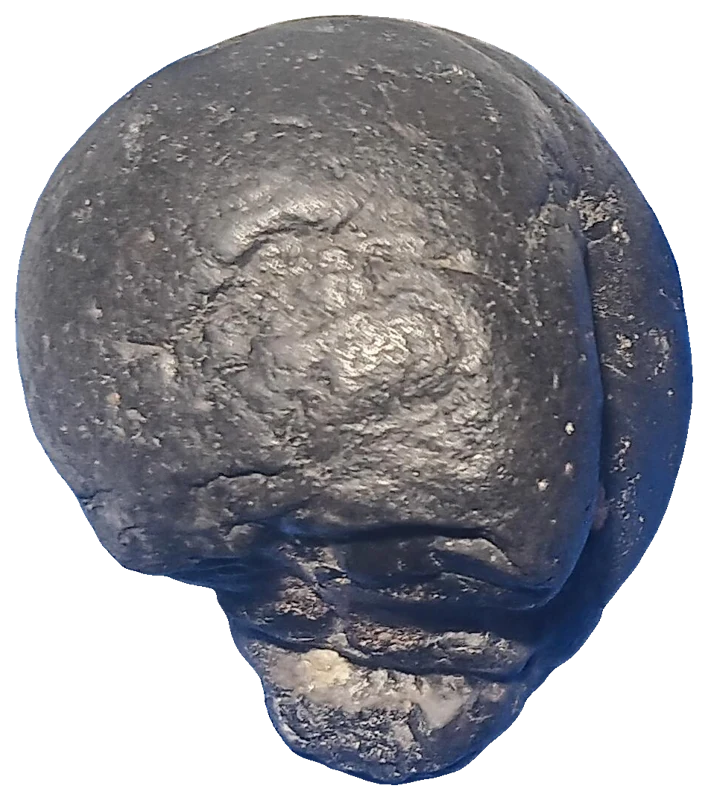
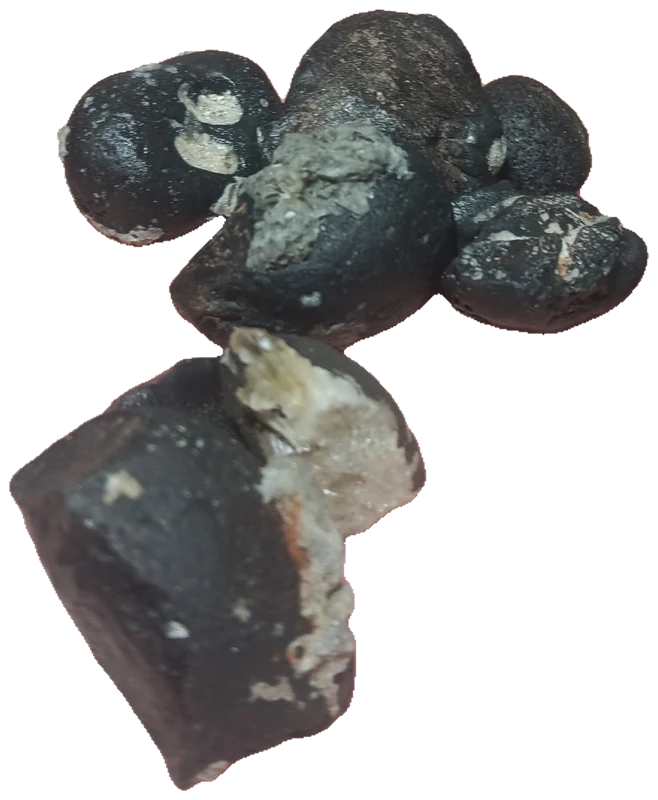
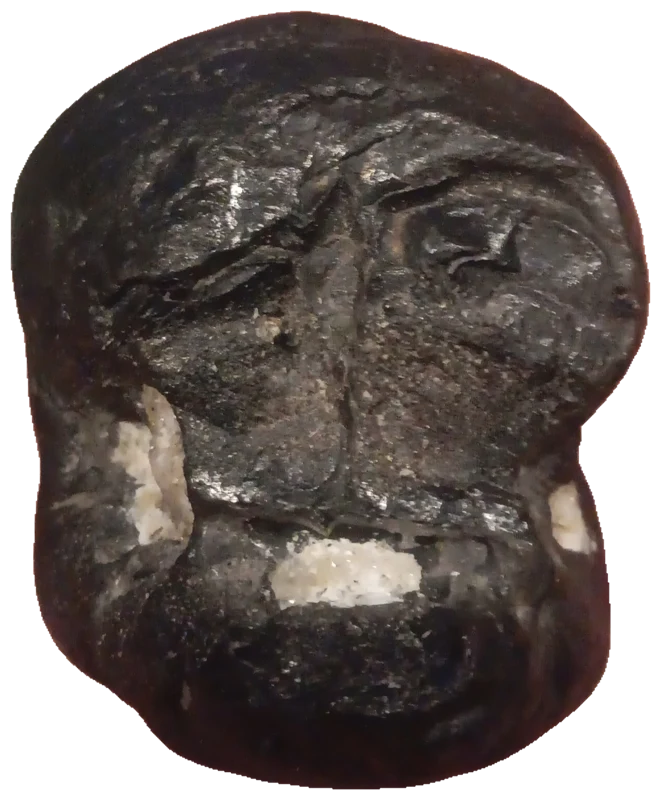

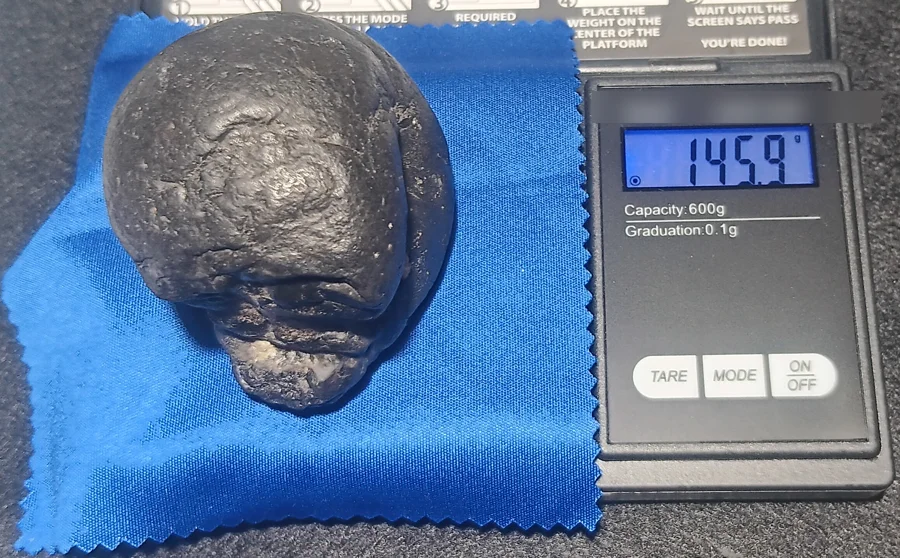
Skully, an ASA Digital Art specimen found in Florida, shown under different lighting and angles. Actual photo of an ASA Digital Art specimen; not identified as carbonado; no origin is claimed. Not a lot for sale. Weight: 145.9 g, as shown on the scale. ASA Digital Art’s account: we first thought the pieces were a fossil or a petrified organism, because Florida’s limestone is so rich in fossils. Through our own research and analysis, we moved to the diamond and plasma-channel idea described above. The specimens were found in Florida alongside honey calcite; rusty-looking pieces resembling NWA (Northwest Africa) meteorite fragments, which are not identified as meteorites and are not claimed to be; and fossils such as what appears to be a Megalodon shark tooth. Over the past decade, ASA Digital Art has also donated some specimens to individuals for safekeeping and to encourage further study in the research community. ASA Digital Art’s observation and untested theory: under strong light, we have seen blue and pink flashes on some of our specimens, and we think this could be light scattering through micro-clusters of tiny crystals. This has not been tested by any lab. It is not a claim about gem quality, “fire,” brilliance or any optical property of any specimen or Luxurious Specimens lot. ASA Digital Art’s specimens are not identified as carbonado. “Found in Florida” describes where they were found, not a claimed origin. No origin, space or otherwise, is claimed for any ASA Digital Art specimen or Luxurious Specimens lot. Published context: South Florida’s Pliocene and Pleistocene shell beds, such as the Tamiami, Caloosahatchee and Nashua formations, are richly fossiliferous[29], and fossil clams (Mercenaria permagna) in Florida limestone have been found with calcite crystals inside[30]. Megalodon teeth are widespread in the fossil record and Florida is one of the places they are found[31], and fossil shark teeth are abundant in Florida’s sedimentary rock that was once shallow sea floor[32].
ASA Digital Art’s observation / hypothesis
Today9. Turning up during construction
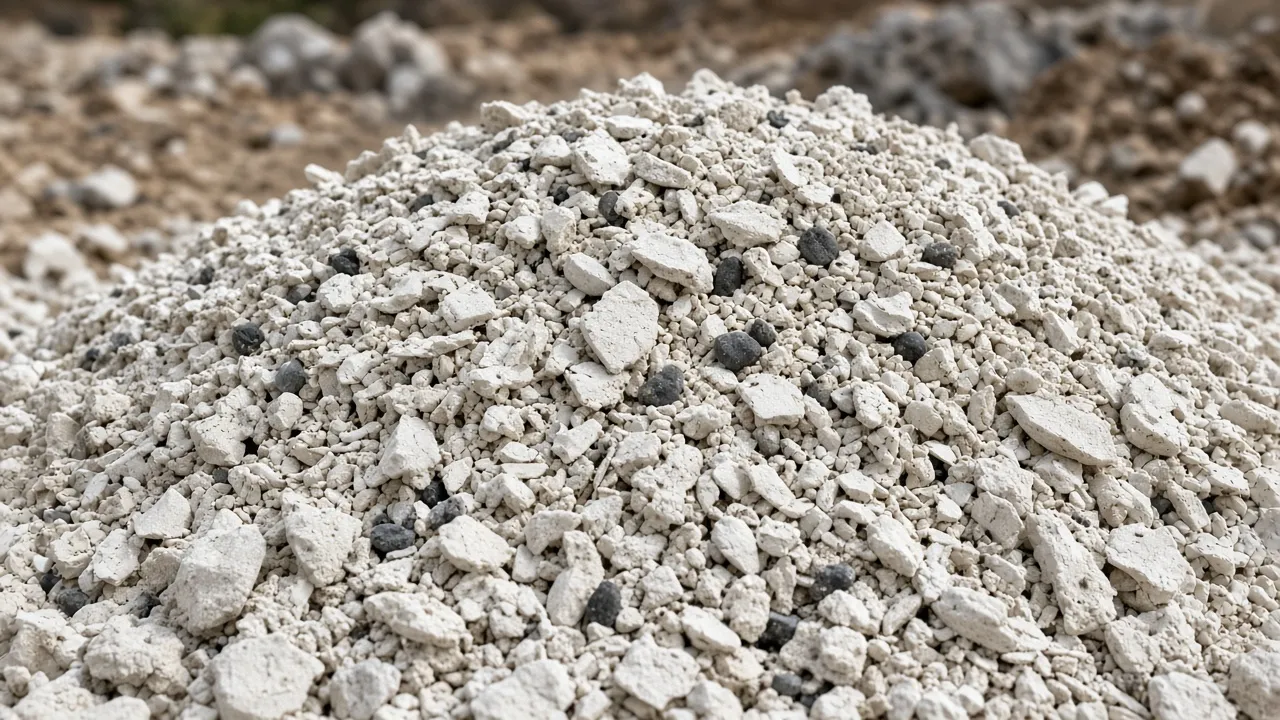
Illustration (digital render): crushed pale limestone and shell with a few dark pebbles, as used for road base. Generic scene; not a real site, quarry or company. Speculative scene. 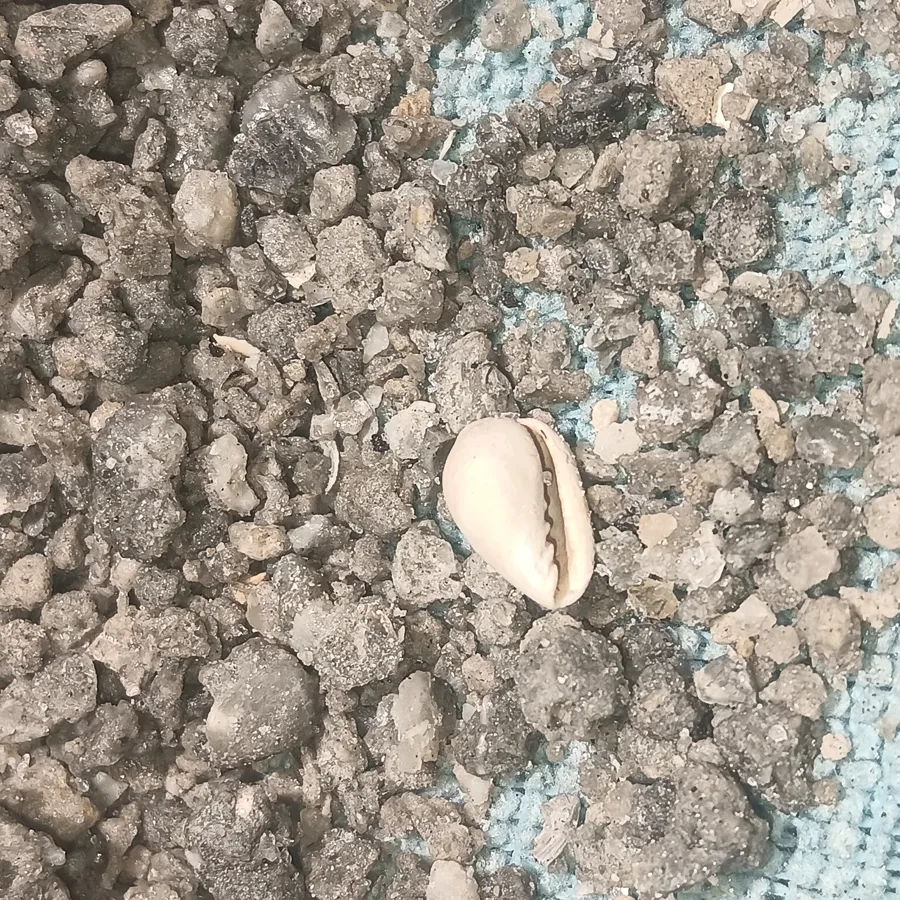
ASA Digital Art photo of crushed sediment and gravel, shown for context. No site is named, and no claim is made about what it contains. Collected lawfully over about a decade as a personal hobby, on break and lunch time while working on construction projects, with authorization to remove non-building material that would otherwise have been thrown out or buried under pavement; not from any park, preserve or public land where collecting is restricted. 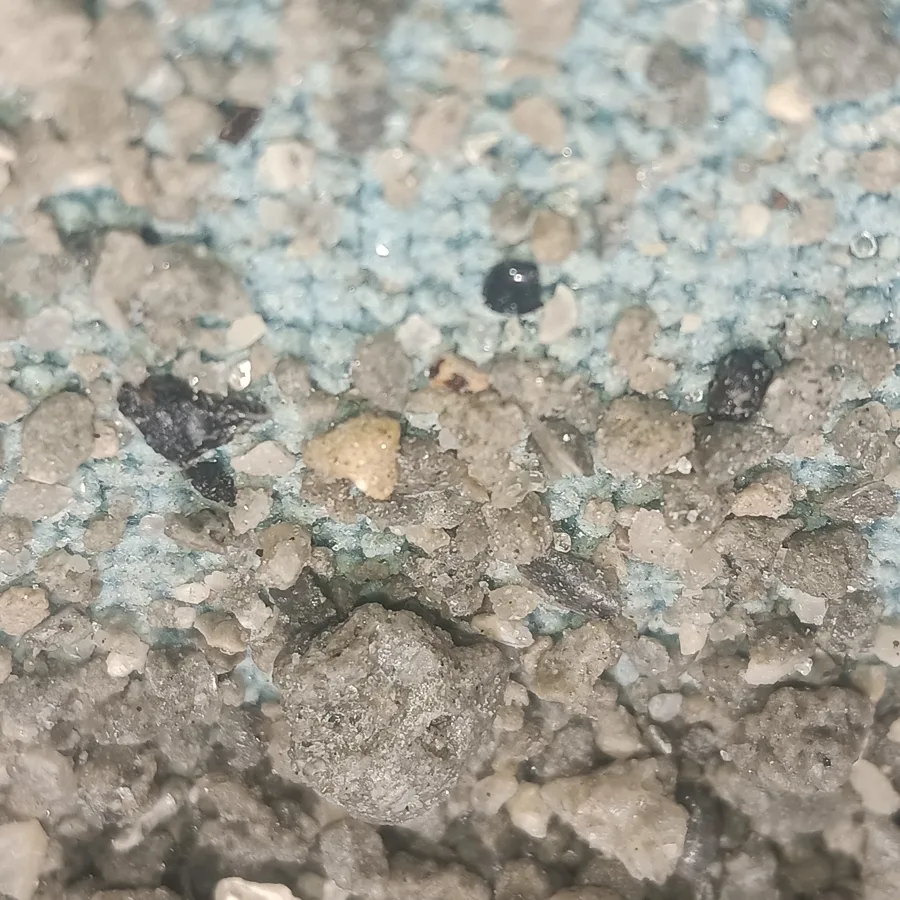
ASA Digital Art photo of crushed sediment and gravel, shown for context. No site is named, and no claim is made about what it contains. Collected lawfully over about a decade as a personal hobby, on break and lunch time while working on construction projects, with authorization to remove non-building material that would otherwise have been thrown out or buried under pavement; not from any park, preserve or public land where collecting is restricted. 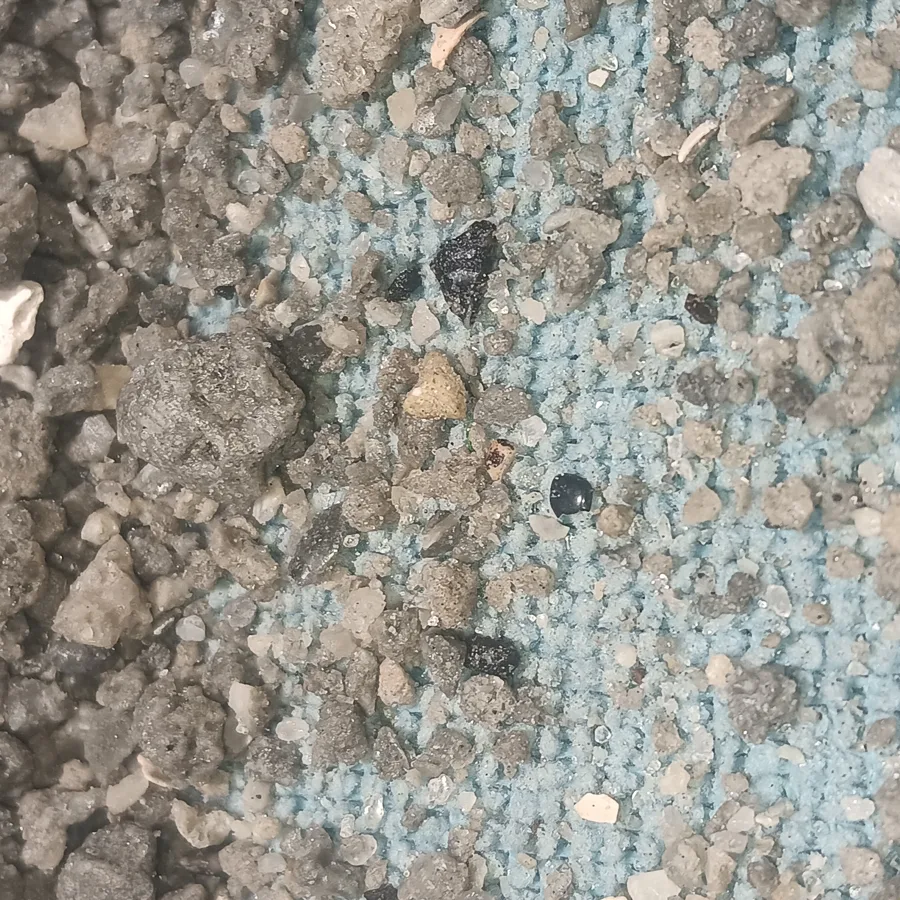
ASA Digital Art photo of crushed sediment and gravel, shown for context. No site is named, and no claim is made about what it contains. Collected lawfully over about a decade as a personal hobby, on break and lunch time while working on construction projects, with authorization to remove non-building material that would otherwise have been thrown out or buried under pavement; not from any park, preserve or public land where collecting is restricted. ASA Digital Art’s observation and theory: in our experience, pieces like ours can turn up in construction material, when ocean sediment and limestone are quarried and crushed for road base and fill. We do not claim that road base, fill or gravel anywhere contains carbonado, meteorites or diamond of any kind. ASA Digital Art’s specimens are not identified as carbonado. No origin, space or otherwise, is claimed for any ASA Digital Art specimen or Luxurious Specimens lot. This is our own account, not a published finding.
Articles
Carbonado: the black diamond that may have come from the stars
The space-origin hypothesis and the evidence behind it.
From stardust to Earth
How the hypothesis imagines carbonado forming and arriving, and what the ages say.
Two continents, one origin
Why carbonado turns up only in Brazil and the Central African Republic.
Sources
- U.S. National Science Foundation news release (Jan. 9, 2007), “Diamonds from outer space: geologists discover origin of Earth's mysterious black diamonds,” via EurekAlert! https://www.eurekalert.org/news-releases/910688
- Brookhaven National Laboratory Newsroom (Jan. 10, 2007), “Diamonds from Outer Space.” https://www.bnl.gov/newsroom/news.php?a=110576
- Garai, J., Haggerty, S. E., Rekhi, S. & Chance, M. (2006). Infrared absorption investigations confirm the extraterrestrial origin of carbonado diamonds. The Astrophysical Journal Letters 653, L153–L156. https://doi.org/10.1086/510451
- Ishibashi, H. et al. (2012). Hydrous fluid as the growth media of natural polycrystalline diamond, carbonado. American Mineralogist. https://doi.org/10.2138/am.2012.4097
- “Infrared and Raman spectroscopic observations of Central African carbonado and implications for its origin” (2008). European Journal of Mineralogy. https://doi.org/10.1127/0935-1221/2008/0020-1817
- Gems & Gemology (GIA), Summer 2017, “Carbonado Diamond: A Review of Properties and Origin.” https://www.gia.edu/gems-gemology/summer-2017-carbonado-diamond
- Gems & Gemology (GIA), Summer 2013 abstract, “Internal Texture and Syngenetic Inclusions in Carbonado.” https://www.gia.edu/gems-gemology/su13ab-internal-texture-and-syngenetic-inclusions-in-carbonado
- 35th International Geological Congress (2016) abstract: “Osbornite (TiN): Implications for an extraterrestrial origin of carbonado-diamonds” (conference abstract, not peer-reviewed). https://information.americangeosciences.org/open-collections/igc/1486/
- “New nitride minerals in carbonado diamond,” International Kimberlite Conference extended abstract (Birkbeck, University of London repository). https://eprints.bbk.ac.uk/id/eprint/27774
- Discover Magazine, “Diamonds From Outer Space” (interview reporting Haggerty's single-asteroid view). https://www.discovermagazine.com/60-diamonds-from-outer-space-11985
- New Scientist, “Rare black diamonds may have come from space.” https://www.newscientist.com/article/1900370-rare-black-diamonds-may-have-come-from-space/
- Schönberg, C. H. L., Fang, J. K. H., Carreiro-Silva, M., Tribollet, A. & Wisshak, M. (2017). Bioerosion: the other ocean acidification problem. ICES Journal of Marine Science 74(4), 895–925. https://doi.org/10.1093/icesjms/fsw254
- NASA Astrobiology, “Whiffs and the Rise of Oxygen” (GOE between 2.4 and 2.1 billion years ago). https://astrobiology.nasa.gov/news/whiffs-and-the-rise-of-oxygen/
- University of Leeds news (2021) on Poulton et al., Nature, “A 200-million-year delay in permanent atmospheric oxygenation” (oxygen first significant ~2.43 billion years ago). https://www.leeds.ac.uk/news-environment/news/article/4797/extra-100-million-years-before-earth-saw-permanent-oxygen-rise
- U.S. Geological Survey, “Deserts: Geology and Resources — Eolian Processes” (desert varnish). https://pubs.usgs.gov/gip/deserts/eolian/
- U.S. National Park Service, “Desert Varnish.” https://www.nps.gov/articles/desertvarnish.htm
- Trueb, L. F. & De Wys, E. C. (1969). Carbonado: Natural polycrystalline diamond. Science 165, 799. https://doi.org/10.1126/science.165.3895.799
- Alkmim, F. F. et al. (2006). Kinematic evolution of the Araçuaí-West Congo orogen in Brazil and Africa: Nutcracker tectonics during the Neoproterozoic assembly of Gondwana. Precambrian Research. https://www.sciencedirect.com/science/article/abs/pii/S0301926806001483
- “The late rifting phase and continental break-up of the southern South Atlantic” (2016). Geological Society, London, Special Publications 420. https://doi.org/10.1144/sp420.2
- “A new scheme for the opening of the South Atlantic Ocean and the dissection of an Aptian salt basin” (2009). Geophysical Journal International. https://doi.org/10.1111/j.1365-246x.2009.04137.x
- Smith, J. V. & Dawson, J. B. (1985). Carbonado: Diamond aggregates from early impacts of crystal rocks? Geology 13(5), 342. https://doi.org/10.1130/0091-7613(1985)13%3C342:CDAFEI%3E2.0.CO;2
- Daulton, T. L. & Ozima, M. (1996). Radiation-induced diamond formation in uranium-rich carbonaceous materials. Science 271, 1260–1263. https://doi.org/10.1126/science.271.5253.1260
- Haggerty, S. E. (2014). Carbonado: Physical and chemical properties, a critical evaluation of proposed origins, and a revised genetic model. Earth-Science Reviews. https://doi.org/10.1016/j.earscirev.2013.12.008
- Mueller, P. A., Heatherington, A. L., Wooden, J. L., Shuster, R. D., Nutman, A. P. & Williams, I. S. (1994). Precambrian zircons from the Florida basement: A Gondwanan connection. Geology 22, 119–122 (USGS Publications Warehouse record). https://pubs.usgs.gov/publication/70187227
- Mueller, P. A., Heatherington, A. L., Foster, D. A., Thomas, W. A. & Wooden, J. L. (2014). The Suwannee suture: Significance for Gondwana–Laurentia terrane transfer and formation of Pangaea. Gondwana Research 26(1), 365–373. https://doi.org/10.1016/j.gr.2013.06.018
- U.S. Geological Survey, State Geologic Map Compilation: Miami Limestone (FLPSm;0), unit description. https://mrdata.usgs.gov/geology/state/sgmc-unit.php?unit=FLPSm%3B0
- Johnson, R. A. (1993). Stratigraphy of the Upper Pleistocene Miami Limestone of Florida. Geological Society of America Abstracts with Programs (conference abstract, not peer-reviewed), via OSTI. https://www.osti.gov/biblio/6112329
- U.S. Geological Survey Geologic Names Committee (2018). Divisions of geologic time: major chronostratigraphic and geochronologic units. USGS Fact Sheet 2018–3054. https://pubs.usgs.gov/fs/2018/3054/fs20183054.pdf
- Florida Museum of Natural History, University of Florida Invertebrate Paleontology collection description (via GBIF). https://doi.org/10.15468/nx4xlz
- University of Florida IFAS Shellfish Aquaculture Extension, “Biology of Bivalve Molluscs” (presentation; photo caption of fossil Mercenaria permagna with calcite crystals). https://shellfish.ifas.ufl.edu/wp-content/uploads/Biology-of-Bivalve-Molluscs_updated.pdf
- Florida Museum of Natural History, “Five Facts: Megalodon.” https://www.floridamuseum.ufl.edu/discover/story/five-facts-megalodon/
- Florida Museum of Natural History, “Five Facts: Fossil shark teeth in Florida.” https://www.floridamuseum.ufl.edu/discover/story/five-facts-fossil-shark-teeth-in-florida/
Image credits
- Background: Cassiopeia A (NIRCam image), weic2330a. Credit: NASA, ESA, CSA, STScI, D. Milisavljevic (Purdue University), T. Temim (Princeton University), I. De Looze (University of Gent). Source (CC BY 4.0).
- How the continents moved from Pangaea (250 million years ago) to today: U.S. Geological Survey, This Dynamic Earth: The Story of Plate Tectonics. Source (USGS, public domain).
- Southern Florida’s Everglades: NASA Earth Observatory images by Jesse Allen, using Landsat data from the U.S. Geological Survey. Source (NASA, public domain).
- Supernova 1987A: NASA, ESA, and R. Kirshner (Harvard-Smithsonian Center for Astrophysics and Gordon and Betty Moore Foundation) and P. Challis (Harvard-Smithsonian Center for Astrophysics). Source (CC BY 4.0).
- Carbon-rich dust shells around the star Wolf-Rayet 140: NASA, ESA, CSA, STScI, E. Lieb (University of Denver), R. Lau (NSF NOIRLab), J. Hoffman (University of Denver). Source (CC BY 4.0).
- Manicouagan Crater: NASA Earth Observatory image by Lauren Dauphin, using MODIS data from NASA EOSDIS LANCE and GIBS/Worldview. Source (NASA, public domain).
- The Pilbara Craton in Western Australia (false color): NASA Earth Observatory image by Joshua Stevens, using data from NASA/METI/AIST/Japan Space Systems, and the U.S./Japan ASTER Science Team. Source (NASA, public domain).
- The Atlantic between Brazil and Africa today: NASA Earth Observatory image by Joshua Stevens, using imagery from the Deep Space Climate Observatory (DSCOVR). Source (NASA, public domain).
- Dzanga Bai: NASA Earth Observatory image by Lauren Dauphin, using Landsat data from the U.S. Geological Survey and data from OpenStreetMap (OSM map data © OpenStreetMap contributors, ODbL). Source (NASA, public domain; map data ODbL).
- Skully photos (asa-specimen-01, 02, 03, 08 and asa-skully-scale): ASA Digital Art (own photos of one ASA specimen, Skully, under different lighting and angles; the scale photo is cropped with the scale branding blurred; not identified as carbonado; no origin is claimed; not a lot for sale).
- Other specimen photos (asa-specimen-07, 09, 10): ASA Digital Art (own photos of ASA specimens, background removed; not identified as carbonado; no origin is claimed; not lots for sale).
- Gravel photos (asa-gravel-04, 05, 06): ASA Digital Art (own photos of crushed sediment and gravel; no site named). Collected lawfully over about a decade as a personal hobby, on break and lunch time while working on construction projects, with authorization to remove non-building material that would otherwise have been thrown out or buried under pavement; not from any park, preserve or public land where collecting is restricted.
- Red-hot images (asa-specimen-09-redhot, asa-specimen-10-redhot): Digitally edited illustration based on a photo of an ASA Digital Art specimen. The red-hot glow was added digitally to picture the plasma-channel idea; the specimen was not heated and does not look like this. Not identified as carbonado; no origin is claimed. Speculative. Made locally from ASA Digital Art photos.
- Fossil tooth photo: ASA Digital Art (own photo of a fossil found with ASA specimens; appears to be a Megalodon tooth; not a lot for sale).
- 1200x microscope photo: ASA Digital Art (own photo of an ASA specimen; not identified as carbonado; not a lot).
- Images labeled “Illustration (digital render)” are artwork made for this page. They are not photographs and do not show actual specimens or any lot.
ESA/Hubble and ESA/Webb images are used under CC BY 4.0. Use of these images does not imply endorsement by ESA, NASA, CSA or STScI. NASA images are public domain and credited as requested.